Never Slide Out of the Day
Looking back on how I've been looking back
Marco Giancotti,

Marco Giancotti,
Cover image:
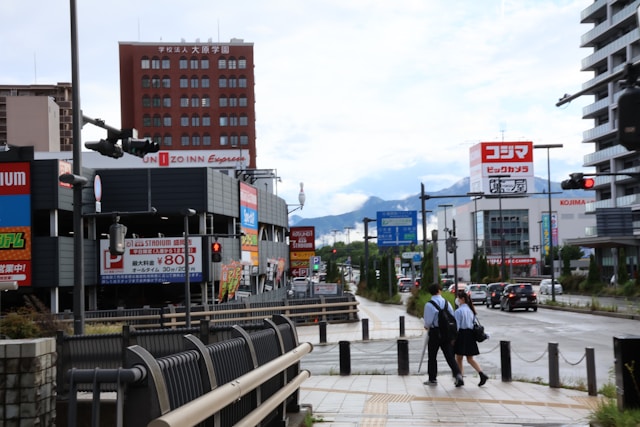
Morioka. Photo by Yanhao Fang, Unsplash
Thinking tools in this post:
Roughly three years and three months ago I executed what I call my Master-Switch Plan: I resigned from my stable, well-paid position at an excellent up-and-coming Japanese startup and hired myself. That same company immediately became my client, but now I was working for them only two days a week instead of five. I did not take other clients: the whole point, from the beginning, was to take charge of those three days per week to do what I wanted with them. All I wanted was to write and to research interesting questions with no strings attached.
I've been doing that this whole time, and I couldn't be happier with my choice. My life is richer, more exciting, and less stressful than ever.
It wasn't easy to get into the current state of mind, though. I haven't figured it all out, and there is no amazing story of breakout success here, but I consider myself successful beyond my dreams at finding a good place inside me. I feel I can share something about how I did that.
This is not to encourage you to make your own Master Switch with your career. Even assuming the idea attracts you, there are other things to consider before attempting something like that—questions about your finances, your relationships, your goals. I was lucky to have a viable combination of those, so I took the plunge.
Instead, I think these simple lessons I'm about to share might be useful to anyone, regardless of career situation, at least if they're in a specific but rather common kind of predicament: thinking about the future makes them shit their pants.
In my case, the pivot won me an enormous amount of freedom and control over my life, and freedom is scary. Add the fact that there is no clear path to stability in front of me outside of "write the best stuff I can until someone maybe hopefully perhaps decides to give me money for it", and you can probably imagine the state of mind I'm talking about. Many people in creative jobs surely feel the same. My gut feeling is that even people in more "predictable" careers might feel like this, because they might feel stuck in predictably uninteresting careers.
So, if you want something big and fuzzy in your life, but getting there feels like being lost in a pristine jungle with only the sun and stars for guidance, this is my modest contribution: never slide out of the day.
The Retros
The first thing I learned after descending into freedom in the middle of a career jungle is that I am my own predator. For months, I had no idea how to manage my open-ended projects. All the task-management skills I had honed during fifteen years of company work became irrelevant overnight. I was fighting against myself for time. When you can do anything you want, the choices can crush you. Should you spend time building a shelter? Should you climb the tallest tree in the vicinity to figure out what direction to go? Should you be making weapons? Or stock up food before everything else?
You Might Also Like...
The answer is, probably all of those things and a bunch more, and most of them will turn out to have been a waste of time. But which should you spend more time and energy on? How important is your comfort today and tomorrow relative to the big goal of getting back to civilization? There is no end to this Amazon River of questions, and that's no good for your stress levels. Sometimes it can make you miss your ex-boss.
Instinctively, I decided early on that I would have to focus on sustainable progress. The only thing I knew for sure was that any kind of success would take a long time to come, assuming it ever came. So it was important that I didn't hate the journey, or I would probably burn out and quit at some point.
For a while, I didn't worry too much about these complexities. I was just getting started, everything was new and exhilarating, and I was learning a lot anyway. The lack of visibility into the future didn't oppress me that much. I swept it all under the rug of my optimism. I would figure it all out, someday.
Then the rug became a small cloth on top of a mountain of dust. Reflecting on how I felt a few months after the Master Switch, I wrote something a little deranged in my journal (forgive the metaphor swap):
They're here. I knew all along that I would have to face them and slay them early on, and it hasn't taken them long to appear in front of me. The four demons that dwelled in the shady recesses of my soul are now out in the open, and they're after me. Perfectionism, Imposter's Syndrome, Loneliness, and Impatience, in all their ugly fanaticism. In order to open the path ahead of me, I was forced to unshackle them, set them free from their black cells and out of my control.
It goes on, but I'll spare you the most embarrassingly dramatic bits.
For long periods, a slow-burning existential dread took hold of me. Was I making the greatest mistake of my life? Would I have to return to the job market poorer, humiliated, and less employable? Was I wasting the most important years of my life?
When your head gives no answers, your gut is usually more cooperative. About one year in, I felt I needed a change of air and some healthy solitude. I booked a cheap hotel (frugality is part of the Plan) in Morioka, a minor city in northeastern Japan, and spent a few days away from home. While there, I stopped doing what I had been doing for months and did one thing only: I sat in a cafe and wrote a long debate with myself about this whole situation. I wrote a paragraph or two about the things I had done well, the lessons I learned, the progress I made, then I wrote a paragraph or two of rebuttal, tough questions, and lists of failures. And so on.
The critical voice was ruthless, not pulling any punches, and the optimistic voice answered back just as vehemently, pointing out the silver linings, the opportunities hidden behind every failure, the lessons to take stock of. Fortunately, the two voices were constructive enough to eventually settle for an uneasy truce, with several ideas about changes I should make to improve my chances of survival.
It felt good. I went back home revitalized, motivated all over again to keep going. These things seemed to help:
- Being away from home, in an unfamiliar place
- Being alone and a little lonely
- Having no other purpose than reflecting on the past few months and the future direction—there wasn't much to see or do in Morioka, which made it perfect for the exercise
In other words, I needed to get out of my everyday environment. Attempting the same in the usual places, for some reason, didn't feel right. How curious.
In any case, it felt so good that I decided to do it again four months later, in another minor city. Since then I've turned those trips into a thrice-a-year ritual, every January, May, and September, each time in a different place in Japan, each carefully chosen to give me no choice other than to look into myself. I've taken to calling these "retro(spective) trips". Every time, I emerge a different man. I'm more focused, more optimistic, and super eager to start doing stuff.
And it's not a temporary illusion either: I have the records of all those retrospective sessions, and I can see that each of them was a permanent step up in my maturity, peace of mind, and productivity. Each time my harvest included long lists of practical ideas on how to refocus, course-correct, optimize, and avoid obstacles, most of which I put into practice the very next day.
The act of thinking earnestly about my life and my future, which used to make me feel queasy every day, instead makes me feel very good during my retro trips. Really, why though?
It was a while before I figured out what was going on. I was only looking at half the picture. It turns out that the positive effects of those trips were even better than I realized at the time.
The Other Half of the Picture
The other half of the picture was the whereabouts of my mind on all the days other than the trips. Before, I did okay-ish on most days, but I had frequent periods of anxiety about it all. I was doing the same work, but in those periods I felt lost, drifting through the jungle in a random direction, my star-reading skills suddenly seeming very suspicious.
Then, gradually, I began to notice that I felt good on the days when every thought was about the immediate tasks at hand, and none beyond that horizon. When, in the early days, I tried to consciously avoid thinking about my long-term prospects, I found it almost impossible. Not thinking long-term felt like an unstable equilibrium, with slippery slopes all around me ready to take me back into anxiety with a brief swooshing sound. It was like trying not to think about a pink elephant, with the smell of elephant dung filling the room and a trunk wrapped around my neck.
Here's where my retro trips helped: they took care of the elephant for me, and that made it much easier to avoid sliding into a constant re-evaluation of my life.
Purposes form webs of dependencies between each other. A plan is a connected hierarchy of goals and subgoals and sub-subgoals. In general, every small action is an intermediate step toward something a little bigger, which in turn is a step toward something even bigger, and so on until you get to your deepest and most mysterious goals and desires. Remove a higher-level goal, and the subgoals that were instrumental to its achievement become obsolete and meaningless—no point in getting halfway there after you've given up on going all the way.
To accomplish anything non-trivial, you need to be sure what it is you're really trying to do, and you need to be sure how the smaller acts connect to that. Lose track of the higher goals, and your means will become your new goals, and may even rebel against your own interests.
Unfortunately, keeping track of the higher goals while taking your smaller steps toward them is also the perfect recipe for analysis paralysis, constant doubts, and a sense of running in place. This is where our good friend Existential Dread resides. Here be demons.
By making retro trips a routine exercise, I unwittingly freed myself from having to think about those scary goal hierarchies all the time. I'm separating the zoom in periods of daily work from the zoom out bursts of life planning. This was the key to both my peace of mind and the huge improvement in productivity I've seen in these past two years.
My Obsidian vault has a motto in a big font on its landing page: Never Slide Out of the Day. Each day is small and smooth, with few handles and slippery edges. The risk of falling into the same patterns of self-doubt is always there. But, on closer inspection, each day is exactly big enough to contain my whole being comfortably. I just need to take care not to slide out of it, not to spill myself all over the vast expanse of days ahead and behind me.
I've learned to recognize the right state of mind every day. If I'm "in the day", I don't think about the past, I don't think about where I'm heading, and I suspend all worries about my life path. It's just me and today's work. Each of those days, modest and unassuming as they are, is where I find all my moments of unmitigated happiness doing what I love. If there is a need to course-correct, if I'm doing something wrong or wasteful or misguided, I will eventually find out during my next retrospective trip. For today, I live my life as I want and need it.
The result is that these years have become, for me, a period of my life that I will never regret living, regardless of where I end up later.
How I Do It Today
Nowadays, my life consists of 98% in-the-day days, and 2% of retrospective work "outside". This balance feels just right for me. The mindset is one of constant experimentation. I don't know what will work, but I know what might work, so each time I commit to a list of changes to make in the following four months, and next time I'll assess how those went.
For example, in the last retrospective I decided I wanted to squeeze one more hour of work out of my brain in my daily schedule, but faced the reality that my morning-person brain takes a dramatic plunge in IQ after about 3 PM. Writing about it in my retro work (nowadays it's not a self-dialog but more like a monologue), I noticed that different kinds of cognitive tasks require very different amounts of mental energy. I did some AI-aided research, found which tasks have a higher cognitive load, and decided to try optimizing the order in which I do things: heavy first, gradually lighter as I get deeper into the afternoon. This simple experiment worked magnificently, as I took stock this morning (I'm in the middle of my January retro trip right now!).
Other times I'm forced to note that an experiment didn't work at all (case in point: I still spend much more time than I'd like writing Aether Mug blog posts; I'm open to suggestions on how to contain these beasts). In those cases, in the retro I'll think of something else that might work based on what I learned in the previous failed attempts.
After a few iterations of this, I've gotten quite good at guessing which experiments might actually work and be sustainable for me in the long run. My initiatives value MX (Marco Experience) highly, because I can't fool myself into doing something I don't want to.
This whole process creates a virtuous cycle. When I'm focused on the here and now, knowing that the time to retro- and intro-spect will come soon enough, I'm not only happier, but also more productive and creative. I achieve more with a tenth of the stress. At the same time, I look forward to the trips as the time when solutions are found. Those trips, in turn, remain optimistic and constructive because, despite tackling the hard questions, I enter them already in a low-stress, forward-looking state of mind.
Externalizing and structuring things like this makes it very easy to surface and disentangle the key issues in my mind, which in turn makes it easy to come up with ideas to experiment with. There's no need to conjure the perfect solution on the first attempt: good enough is more than good enough. And if a better idea exists, my gut will work on it and make it pop in my mind soon, without me consciously struggling with it, or sliding out of the day. Rinse and repeat, good Water Lily.
Greetings from the jungle! ●
Cover image:
Morioka. Photo by Yanhao Fang, Unsplash
Thinking tools in this post:
 JapanMind
Comments
Loading comments...