The King's Great Fortune
Marco Giancotti,
Marco Giancotti,
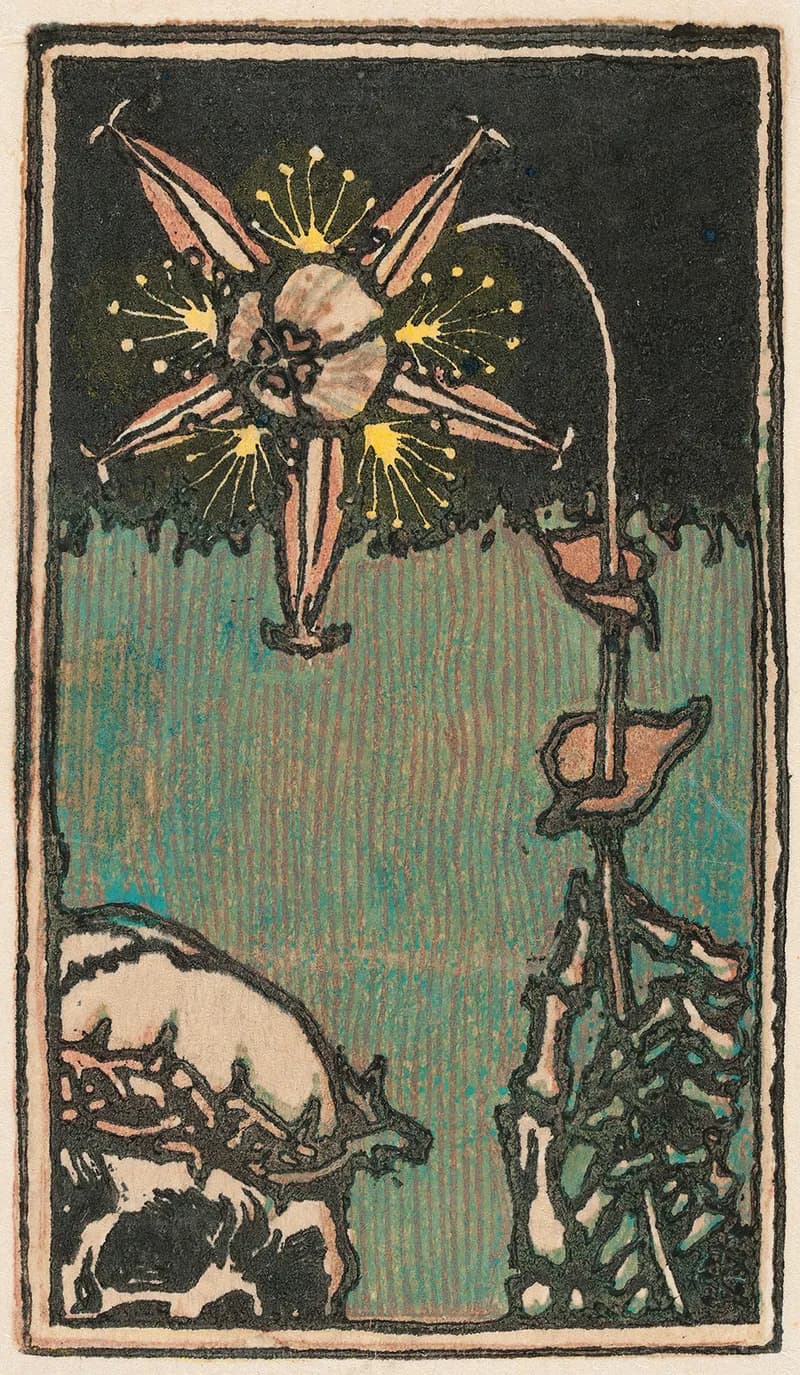
Cover image:
Death and the Flower, Akseli Gallen-Kallela
There was, a long time ago, a small kingdom, and in that small kingdom was a prince who deemed himself just. This Prince reveled, above all else, in subjecting his people to the most peculiar trials. In his Princely youth, he enjoyed making his servants go about their chores while hopping around on one leg, or while tied to a dozen dogs by as many leashes. He often ordered his history teachers to perform their lectures without using the letters "O" and "L", or while singing them in rhyme. Once, the Prince even convinced the King, his father, to announce an edict on his behalf: for a whole week, all citizens were to halt whatever they were doing and remain perfectly still when the Prince was in sight. Seven days the Prince travelled, from morning to nightfall, in the city streets and the country roads, marvelling at the spectacle of his kingdom frozen in time, all acts interrupted in mid-course, all fields scattered with bent scarecrows, all markets silent with crowds of statues.
Seeing his subjects strain and struggle to go about their lives with new strictures filled him with mirth and laughter. And he deemed himself just, for he also subjected himself to the same limitations: he would avoid using "L" and "O" during lectures—by remaining silent; he would do chores hopping on one leg—if only he had chores to do; and he obediently followed his father's edict, never moving when he himself was in sight—which, given that he had had all mirrors removed, never happened during that memorable week.
One day the old king died, and the Prince ascended to the throne as the new monarch. He had been waiting for that day with impatience and doubt in equal parts. Without his father turning down his most creative ideas, he now had free rein to enjoy his pastime. But he had lived long enough to grow bored of his own usual exploits. He no longer drew any satisfaction from seeing his subjects wrestle with mundane restrictions. He experimented with giving them impossible tasks that no one could ever accomplish, but the victims responded by surrendering without even trying, which wasn't at all interesting. Furthermore, he aspired to something more suitable to a King than a lowly torturer. He considered himself a fair sovereign, and did not want rumors to spread that he was violently killing innocent people: his were exercises, diversions. Thus he had run out of ideas.
On the occasion of the King's coronation, a foreign emissary from an eastern land visited his court to convey her sultan's compliments. Although she was there in the role of a diplomat, the Emissary was also the sultan's most trusted advisor, and was famous for her incredible cunning and her genius for unorthodox solutions to royal problems. Curious to test the Emissary's intellect and eager to find new outlets for his craving, the new King sought the diplomat's counsel. He explained the frustration that afflicted him, and asked if, in the East, the regents had grand, interesting ways to keep their subjects occupied.
The Emissary pondered on the question for a while, then spoke.
"What you crave, Your Highness, is seeing the perseverance of hope. Impossible tasks won't do, because they crush hope at its roots. Easy obstacles won't work either, because they are overcome in the blink of an eye. Instead you need to give your citizens something that is possible, yet almost impossible.
"May I suggest you build a labyrinth? Then send your citizens in with directions telling them precisely where to turn at each bend in the corridors. Give each of them different directions, pieced together randomly: most directions will be wrong, each in a different way, but one of them may just happen to be right—and on that possibility will hinge the light of your people's hope. Such is the way of a just ruler.
"Then watch them enter the tortuous halls of your labyrinth with their mendacious directions, hopeful to soon be out on the other side. Watch them wind up in dead ends, convince themselves that they must have taken a wrong turn somewhere, and retrace their steps to try it all over again."
With that, the Emissary showered the King with praise for his ambitions, and left the castle the following day.
The idea of a labyrinth mesmerized the King. He summoned his best architects and artisans, and ordered them to build a vast, intricate structure where a thousand paths led nowhere, and the exit was hidden in the most anonymous of corridors.
For months and years the construction went on. The King awaited its completion impatiently, inquiring every day about the progress and punishing anyone he thought was slowing down the works. A whole city district next to his palace was razed to accommodate the new edifice. The masons and the carpenters toiled day and night, and many of them, to the King's great amusement, dropped dead from exhaustion.
The King cared not for the tedious minutiae of the project: he only wanted it to be completed, and to watch it silently imprison his hopeful subjects behind its open door. Fearing that his victims might help each other, he ordered that only one be let in at a time. He also requested that thorny vines and noxious flowers be planted along the inner walls, but not so powerful as to instantly kill those who approached them. He must always remain a fair King, after all.
Finally the Labyrinth was completed: enormous like a mausoleum and made of black stones finely polished to be unclimbable. Its doorless exit faced the royal quarters, clearly visible from the King's chambers; the entrance, however, was on the opposite side of the structure, for he didn't want crowds gathering under his balconies.
Immediately the King ordered that the game be started, and that citizens from all corners of the city be sent in, one every few minutes. He took to sitting every day on his bedchamber balcony, which overlooked the Labyrinth's only exit.
At first, the King was ecstatic at his creation. It was working just as the Emissary had promised. The little exit door of the Labyrinth was right there, under his eyes, wide open for anyone to pass through, yet no one emerged out of it. The King imagined his confused subjects walking and walking, taking turns following their erratic directions, and puzzling at why they weren't working. Days passed, and the sight of the deserted exit filled him with deep satisfaction.
Yet, after only five days, as he was eating his roast peacock breakfast on the balcony, the King saw something that made his golden fork tumble to the gardens below: not only had a young woman come out of the Labyrinth's exit, but she had done so with a smile on her face. The monarch, irritated, had the woman brought to him for an interrogation. She was shy and properly reverent towards her King, but she was also in an infuriatingly good humour.
"I thank you for your benevolence, my Lord!" she said as she knelt in front of him. "Of all your decrees, this great Labyrinth was the easiest to follow. It only took ten minutes to pass through, and the gatekeeper even gave me the directions to the exit!"
In her hand, she held a humble necklace made of several wooden beads, each carved with the word "left" or "right". The King was thunderstruck. How could this be possible? He confiscated the woman's necklace and had it examined by an architect. Indeed, said the architect, the succession of beads saying "left" and "right" described the precise path one would need to follow to find the exit. Step by step, the necklace told the woman where to turn, leading her directly to her salvation.
The King was livid. It was clear to him that the gatekeeper had consciously disobeyed him and given accurate directions to the woman. Perhaps he was in love with her. Perhaps he had a grudge against the King. None of that mattered. The woman, announced the King, was probably sinless, but she would have to be detained for some time in the dungeons lest she tell others the correct way out of the Labyrinth. Then he ordered the destruction of the necklace and the execution of the traitorous gatekeeper. Brought to pitiful tears, the man pleaded innocent, claimed that all necklaces were created haphazardly in the same way: he snatched a handful of loose beads from a large bowl, so that it was impossible for him, or anyone else, to choose one set of directions over another. It was all in vain, for the King laughed coldly at his petty squirming. After the formal beheading, the King proclaimed, "let the second citizen into the Labyrinth, and do things properly this time."
His advisors wanted to tell him that the woman was by no means the first to set foot in the building. They knew that many people had entered it before her and had never come out. But their master was in a foul mood: speaking up now might turn his ire against themselves. And so they bowed quietly and went back to their jobs.
The King returned to his daily peering at the Labyrinth's exit. When no one came out for one day, then another day, he began again to feel good about himself. But it wasn't long—a week or two, perhaps—before another figure appeared in the small black rectangle of the exit doorway. It was a wizened old man, leaning on a gnarly walking stick. Like the young woman before him, the man was holding a bead necklace. This, too, was shown to contain the right succession of turns to go from the entrance to the exit in less than fifteen minutes. It was different from the previous one, with a few false turns and a longer path, but it had worked nonetheless.
Again, the King flared in wrath. He ordered whoever had strung the beads together impaled, and assigned seven of his most trusted servants to supervise the creation of all future necklaces. As a final precaution, he decreed that not an adult man, but an innocent young girl be the one scooping beads from the bowl. These clever ideas finally placated the monarch, and everyone went quietly back to their jobs.
Yet it wasn't long before another, then another citizen found their way out of the King's Labyrinth. Every time, they had simply followed the correct directions carved into their necklaces, and their hopes had been rewarded with an easy escape. Those directions were not exactly the same each time: some led their owner through shorter paths, others through winding, crooked paths—but they all, invariably, led to the exit. Again and again, the King had the latest lucky citizen detained and another traitor executed. But as more of his subjects kept coming out of the doorway at irregular intervals, the King began suspecting that the problem might reside not in the necklaces, but in the Labyrinth itself.
"You've built an easy path out of the Labyrinth," he thundered to his Chief Architect. "One that even a few beads grasped by a child can lead through."
The Chief Architect's head fell, and another man took his place. The new architect, a young ambitious man, reviewed the building's plans and found no flaws. The way out was complex and erratic, with countless false turns and double and triple forks. How those peasants had managed to take the right turn every time was a mystery, but one thing was sure: the old Chief had died for no fault of his own. Even so, the new Chief had to do something. After days of agonizing confusion, an idea came to him in the middle of a dream. The next morning he mobilised all the stonemasons in the city, and by evening twenty-nine new exits had been opened on the palace-facing wall of the Labyrinth. At the same time, his carpenters built thirty beautiful doors, and mounted them on the thirty openings. All but one of them were locked shut.
In his audience with the monarch, the new Chief Architect explained his brilliant plan. Instead of a fixed way out, the right exit would change all the time: every few minutes, the door currently open would be locked, and one of the other twenty-nine would be opened. In this way, even if a citizen entered the Labyrinth with the right directions, those directions were guaranteed to be wrong by the time the person finished following their beads' instructions. Those citizens would find themselves in front of a locked door, and would have to keep hoping for a better path. Most important of all, it would be His Highness the King himself, from his regal balcony, to decide which door would be next. This way, concluded the man, the King would need to trust no one else.

The King was impressed by the young architect's ingeniousness and praised him profusely, convinced that the problem had been solved with elegance and at little cost. The following morning he sat once again on his bedchamber balcony, but this time he was in control. At irregular intervals, he uttered a number: "twenty-seven", say, then "four", then "sixteen", as the whim took him, in the most unpredictable manner he could contrive. His orders were then relayed by a chain of servants to the exit gatekeeper who, every time, bowed low to the King, shut and locked the open door, walked with heavy foot to the door bearing the new number, and opened it with an ornate key. Sometimes the King waited for an hour or two before changing the exit, sometimes he blurted it out not a minute after the last. This continued for the whole day, and no one came out of the Labyrinth. The following day he returned to it with more vehemence, and continued producing arbitrary sequences of numbers until sundown. During this time no citizen escaped.
Joy filled the King's heart as he saw his new plan work for two consecutive weeks. But the joy did not last longer, and the King's puzzlement and despair were all the deeper when another man—a blacksmith's assistant striker—strode out of the new exit, agitated but glad to be alive. He claimed to have followed the instructions on his beads for thirty minutes amidst beastly cries echoing throughout the corridors, and had found the exit door open as if it had been open all along. This, the King knew, could not have been staged, for he had switched doors seven times during that period. The beads had been wrong in regard to the first door, which was opened when the citizen entered the building, and they had been wrong in regard to the next five doors as well. Yet, just as he was about to reach the dead end prescribed by his necklace, precisely that door had swung open. How was that possible, if not through the cooperation of all his subjects together?
The regent banged his head against the marble columns, shrieked venomous words at everyone around him, and ordered the new Chief Architect and the master mason burned alive for their knavery. He was sure that someone was conspiring against him, and imagined secret syndicates of traitors, united in their wicked hate of their trusting monarch, always plotting, always planting spies and sabotaging his rightful entertainment. Were they all his enemies? Who could he trust now?
There was only one painful answer: on the matter of the Labyrinth, he could trust no one in his whole kingdom.
Then, one dark night, the King recalled the time of his coronation and rejoiced. If no one could be trusted within the confines of his realm, he knew someone from beyond those borders who could be relied on: the sultan's eminent Emissary! Now, that was one shrewd woman! He should have asked her to stay longer. Nay, he should have hired her on the spot, no matter the price. The King wrote a missive and had it delivered with the utmost celerity to the sultan's land. In it, he explained the whole series of events. He wrote of how his perfidious servants kept second-guessing his decisions, bemoaned that they always found ways to subvert his expensive pastime, and detailed his theories of conspiracy and widespread treason. He appealed to the Emissary's sense of responsibility, for it had all begun from her idea, after all.
How, he besought in his royal handwriting, was that terrible mess to be righted?
Weeks passed as the King awaited the Emissary's reply. In the meantime, the Labyrinth continued spouting healthy and grateful citizens, sometimes two weeks in a row, under the ruler's abhorring eyes. The King took to locking himself up in his rooms, never looking out of a window, always doubting every word and action of his attendants. How many of his courtiers lost their lives in those weeks because of a vague word or an odd expression of the face!
Finally his messenger returned from his eastern voyage with a tasteful letter from the Emissary. It was brief, but contained everything that the King had hoped for, and more. This is what it said.
"Your Esteemed Majesty of the Great Western Kingdom, I humbly salute Thee. It pains me to read of the tortures Thou hast had to suffer by the hand of incompetent servants. Pray rejoice, for I see that not treason but Great Fortune has visited Thee.
"I am but a humble and fallible stewardess, but if I have learned anything in my years of service to my Master, it is to recognise when a Royal Act is inspired by Heaven. This is what Your Esteemed Majesty has accomplished: Thou hast succeeded in creating the rarest of wonders, an Enchanted Labyrinth! Thy Superior Intellect produced an Enlightened Structure capable of singling out the most deserving people out of all that walk its paths, and of rewarding them with whatever they deserve.
"But if simpletons are rewarded with freedom, imagine what Wondrous Gifts the Enchanted Labyrinth would bestow upon Thee, the worthiest man in the whole Kingdom!
"What a historical time this is for Your Esteemed Majesty—for all of us! Your Illustrious Name will resound to the edges of the World, and Thou wilt have a way to appraise the worth of any man or woman who dares to appear in Your Graceful Presence."
As soon as the King finished reading the Emissary's message, he knew his choice of adviser had been wise. Such a visionary! No one was trying to trick him. He had been a good King, and they had no reason to betray him. He had simply surpassed his own expectations and built a magical Labyrinth! The intricate twists and turns of the building's sublime architecture were able to shift depending on the power of its visitor's soul. The walls could read the beads in the visitor's hand, and could reshape themselves so that the most honourable ones would reach the exit with ease.
The King stopped his game. He summoned all seventeen jailed citizens that had escaped the Labyrinth in the three years since its inauguration, gathered them all in his throne room, and welcomed them as valuable guests. He talked to the young woman, the first one to escape the Labyrinth; he talked to the old man with the walking stick; he conversed with each of them in turn, and found them to be good people, just as he had expected. They were simple and vulgar, no doubt, but there was a purity and dignity to them that the King had never noticed before: no wonder they had been chosen by the Labyrinth. At the end of the meeting, the King rewarded each of them, as they deserved, with a wooden disk bearing his royal emblem, and allowed them to go home.
Next, he decided, would be his own turn to receive the boons of his magical creation. He patiently waited for the next sunrise, but he could not sleep in his excitement. All these years thinking about his subjects had not been in vain. His games had borne him a gift better than he had ever dreamt of. And the gift was right there, a few steps away, waiting for its owner to claim it in full.
The sun rose, and the King left his palace for the first time in months. He was in high spirits. Followed by a rich procession of pages and dancers, he rode his royal white steed to the entrance on the far side of the Labyrinth, a place he had never visited before. Compared to the carefully curated front facing his balcony, the Labyrinth's back was squalid and run-down, and the grass seemed to have been wiped out by a multitude of feet—but the King did not mind that. Showered by the symphony of trumpets and harps, he dismounted from his horse and walked into the little cabin where the necklaces were assembled. There he watched a pale and emaciated girl wearily push her trembling hands into a bowl and pull out a bunch of wooden beads. She dropped them into a funnel, and the beads tumbled through a pipe. She then strung them together in the same order as they came out. When enough of them had been thus linked, the girl tied the necklace and handed it to her lord.
"Good girl. You folks have been doing things properly," the King said as he looked with admiration at his line of beads marked "left" and "right". "So this is to be my magic formula, then." The King raised his hand, blessed his people, and (with the dignified air of a wise ruler) disappeared into the entrance of the Labyrinth. At once, his attendants rushed to the opposite side of the edifice. They positioned themselves in front of the chosen exit, set up royal tents and congratulatory festoons, and waited for the monarch's egress.
Thirty minutes passed, but the exit doorway remained dark and empty. Two hours, then four hours passed. Some of the King's advisors, concealing their anxiety, ordered a second exit door to be unlocked, then a third, then all of them. But when evening came, the King had not come out of any of them.
Perhaps, the advisors said, he had injured one of his noble feet, more used to gracefully posing on the throne than to the prosaic act of walking. If that was the case, they must save him at once. No one had taken note of the sequence of directions on the King's necklace, so a hundred men were dispatched through the cavernous entrance to search for him, each taking a different route through the vine-covered corridors. And yet, even when midnight came, neither the King, nor the search party, had come out of the Labyrinth.
The next morning, a large army from the east invaded the kingdom. They came armed to the teeth, with shiny scimitars and menacing black turbans, but they encountered little resistance. They found a land mostly empty, with whole towns abandoned to the beasts and trade routes devoid of traders. No farmers tilled the land, no artisans manned the workshops, and no beggars lingered in the side streets. The invaders found a kingdom without a king.
That same evening the sultan's men took control of the ghostly capital city. When they entered the royal palace, the first order they received from their commander was to destroy the Labyrinth. They surrounded it with fine wood from the royal furniture and set fire to it. As the flames rose high towards the pink sky, the invaders heard the howls and cries of a thousand desperate voices. Afterwards, when the heat had subsided and the magical edifice was nothing more than blackened rubble, the eastern soldiers found mountain upon mountain of bones piled up in every corner of the razed structure. None of those bones looked especially royal. ●
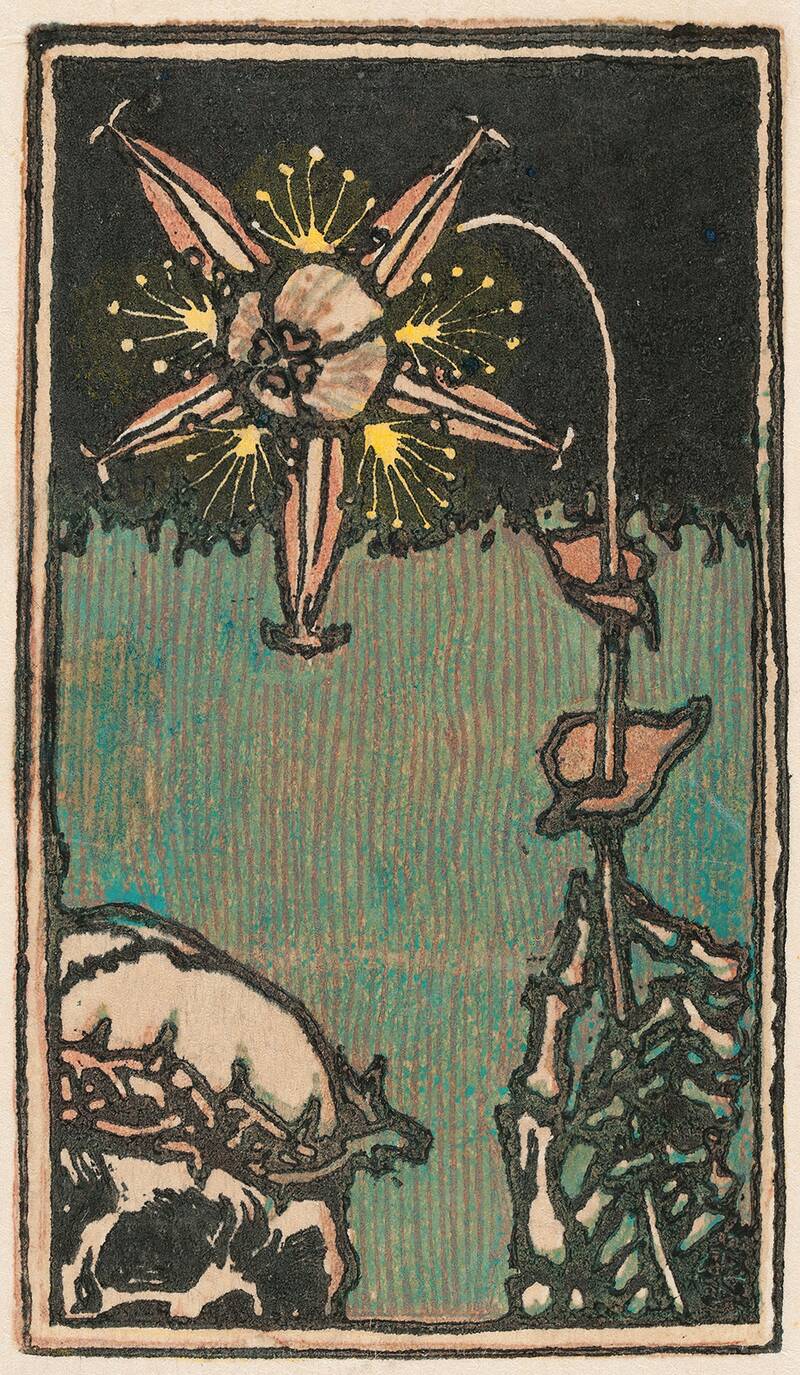
Cover image:
Death and the Flower, Akseli Gallen-Kallela
 SystemsFramings and ModelsMind
Comments
Loading comments...